 Think and Growth Back to channel
Eat the Frog: The One Task You Keep Postponing Goes First
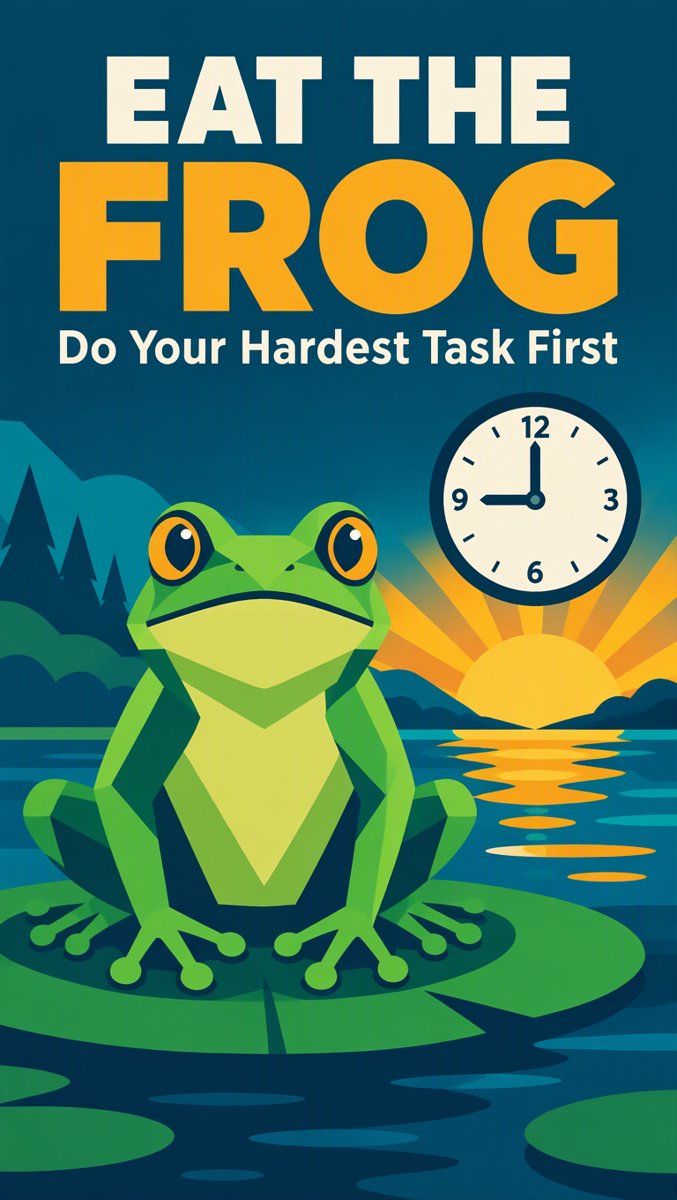
Eat the Frog: The One Task You Keep Postponing Goes First
Monday · Work theme — one practical mental model, taught in about 70 seconds. Full article below, video at the top.
The 9 a.m. decision that runs your whole day
Every to-do list has one item that glows like a warning light. It's not the longest task. It's not even the most complicated one. It's the task you reorganize your entire morning to avoid — the proposal you'll "get to after email," the difficult conversation you'll schedule "once things calm down," the analysis you'll start "right after this one quick thing."
Brian Tracy has a name for that task: the frog. And his method — popularized in his book Eat That Frog! — is brutally simple: do it first.
The name comes from a quote often attributed to Mark Twain: "Eat a live frog first thing in the morning, and nothing worse will happen to you the rest of the day." Tracy's version: if you have two important tasks in front of you, start with the biggest, hardest, and most important one — first, every single day.
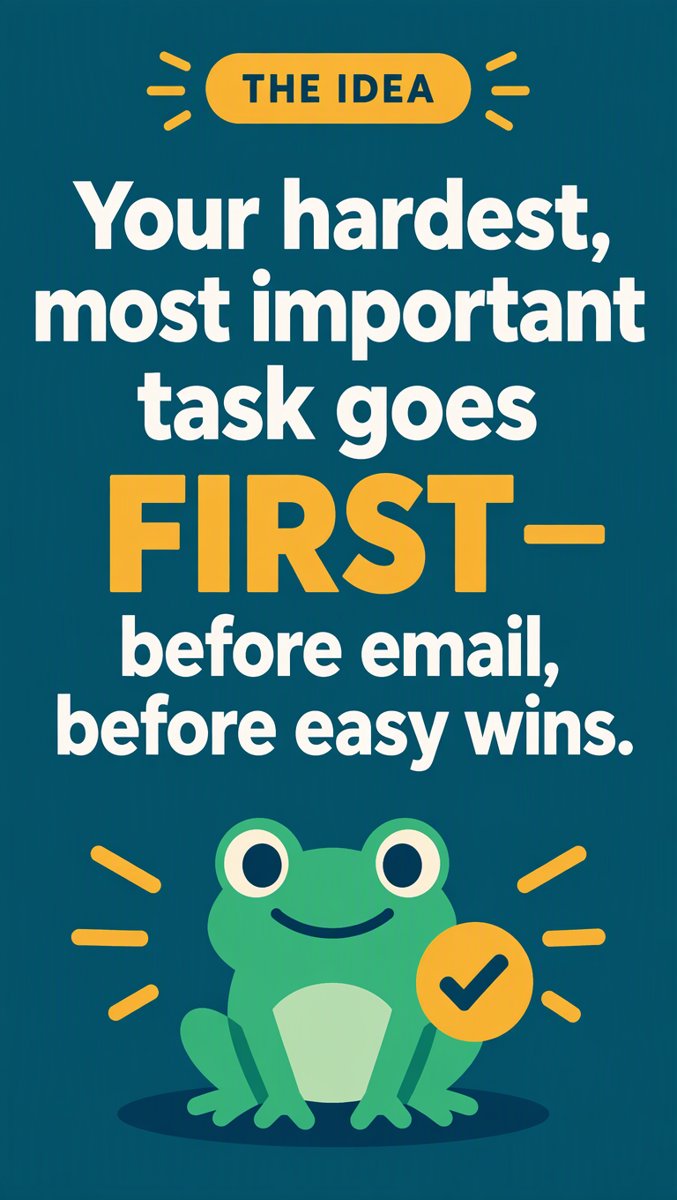
Why it works: your self-control has a morning shift
Two research threads back this up.
First, willpower isn't flat across the day. Research by Maryam Kouchaki and colleagues (the "morning morality effect," published in Psychological Science) found that across four experiments, people showed meaningfully more self-control on the same tasks in the morning than they did later in the day. Your best regulatory resources show up early — and they erode as decisions, messages, and stress pile up. Spending that peak on inbox triage is like paying for a personal trainer and using the session to stretch your thumbs.
Second, procrastination is not a laziness problem — it's an emotion problem. Carleton University's Tim Pychyl, one of the most-cited procrastination researchers alive, frames it this way: we procrastinate to avoid a bad feeling, not the task itself. The dread lives in the gap before starting. That's why his standard prescription is so short: just get started. Action collapses the emotion; the task is almost never as bad as the anticipation of it.
Put those together and Eat the Frog stops sounding like a motivational poster and starts sounding like scheduling logic:
- Your hardest task demands the most self-control → self-control peaks early → match them.
- The dread of starting is the real cost → starting early, at your sharpest, is the cheapest possible moment to pay it.
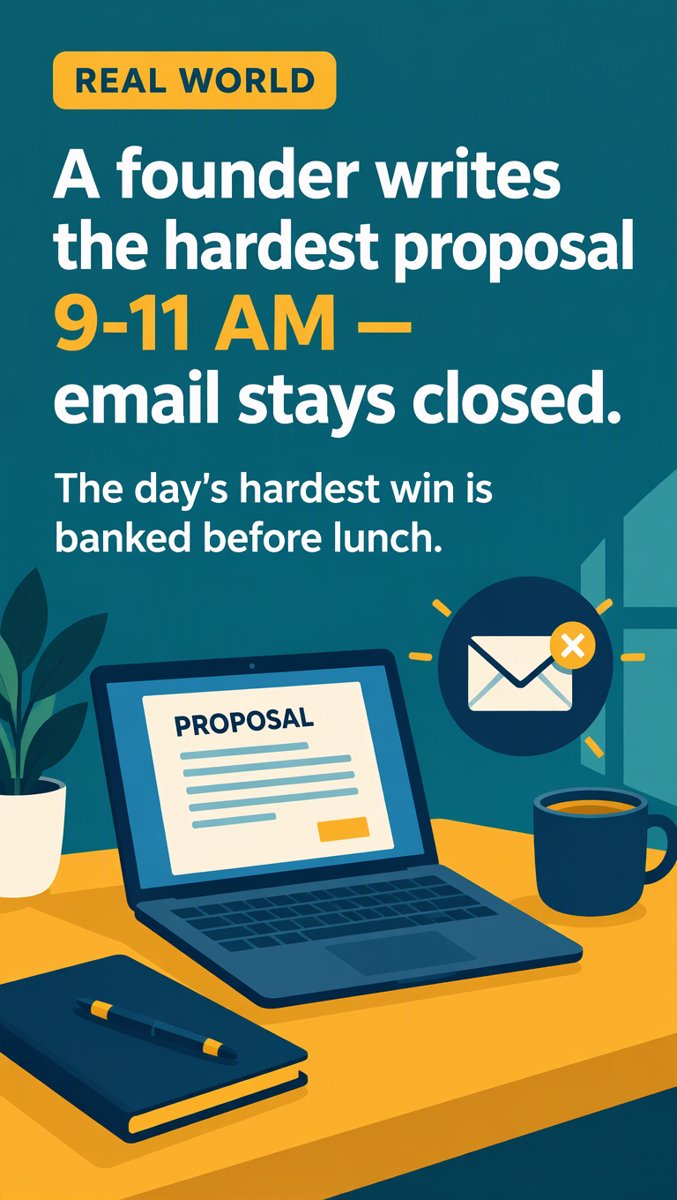
What it looks like in practice
Picture a founder who hates writing proposals. Left alone, she'll spend her sharpest two hours "warming up" — email, Slack, a reformatted spreadsheet — and start the proposal at 3 p.m., mentally fried, hating every minute.
The frog version: at 9:00 a.m., inbox closed, she opens only the hardest proposal and works until it's done. By 11:00, her toughest, most valuable win of the day is banked. Everything after it — meetings, email, the fun project — happens on house money. Nothing left on the list can be worse than what she already ate.
That psychological tailwind is the quiet genius of the method. Most productivity systems try to make you feel motivated first. Eat the Frog inverts it: do the hard thing first, and motivation shows up afterward, carried by relief and momentum.
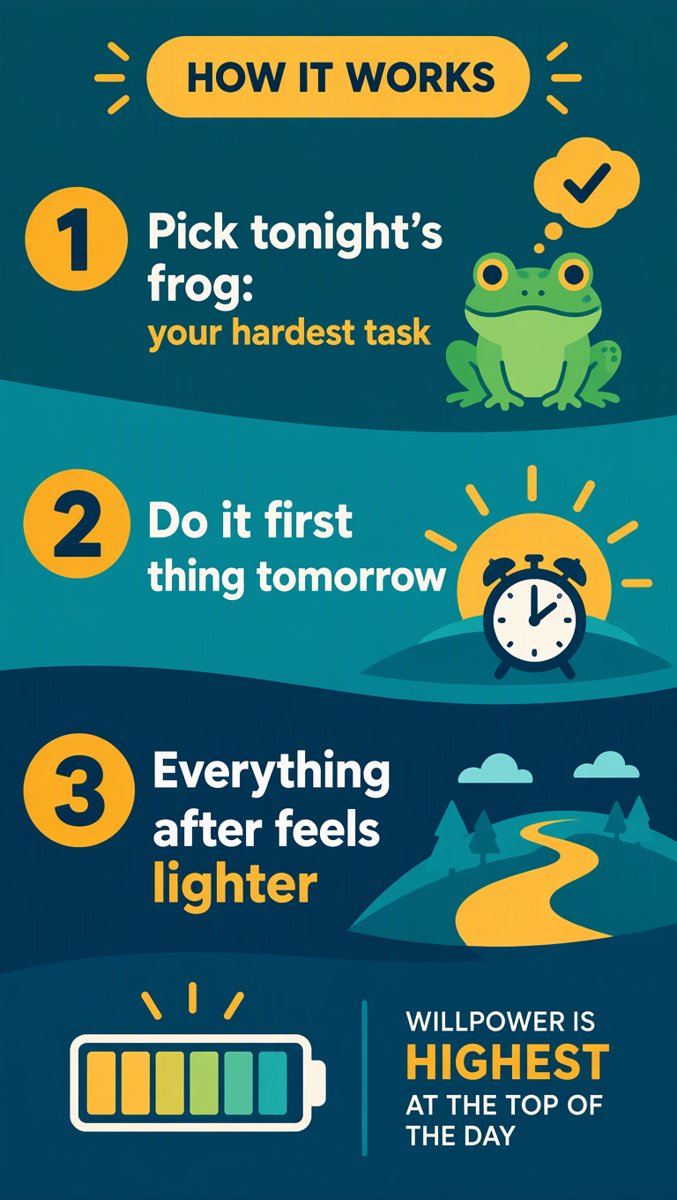
How to run it, in three steps
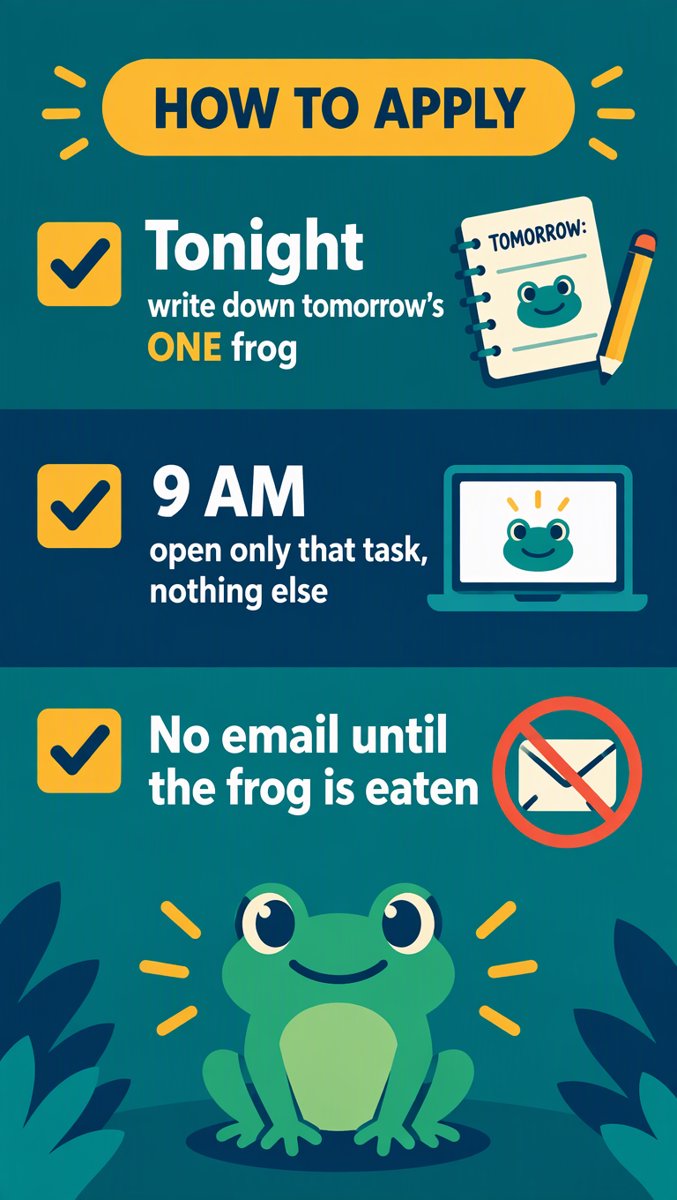
- Tonight: write down tomorrow's frog. One line. The task you're most likely to avoid is usually the one that matters most — Tracy's own selection rule. Deciding the night before matters because morning-you shouldn't spend willpower negotiating which task is hardest. The decision is made; you're just the executor now.
- Tomorrow, ~9:00 a.m.: open only that task. Not the inbox first "just to check." The frog gets your first focused block, while your self-control account is still full.
- No email, no messages, until it's eaten. Email is other people's priority list, and it's perfectly engineered to eat your peak hours. The frog and the inbox do not coexist.
Honest caveats (because you deserve them)
- Chronotype is real. If you're a genuine night owl whose brain boots up at noon, forcing a 9 a.m. frog fights your biology. The transferable principle is: your hardest task gets your personal peak window — for most people, that's morning.
- "Hardest" must also mean "important." Grinding through a hard-but-pointless task first thing is just suffering with better branding. Tracy's filter: biggest, hardest, and most important.
- Not every day has a frog. Some days are legitimately operations-heavy. The habit still pays because on the days a frog exists — and that's most days that matter — the decision is automatic.
The takeaway
The task you keep postponing is not signaling laziness. It's signaling importance with a bad emotional wrapper. Unwrap it early, while your self-control is at full charge, and the rest of your day gets structurally easier.
Hard first. Easy all day.
Pick tonight's frog before you close this tab.
🎬 Narration Script (as recorded — 157 written words ≈ 70s with Puck... er, Charon pacing)
There's one task on your list you keep postponing. Today, it goes first.
This is Eat the Frog, made famous by Brian Tracy. The rule is simple. Pick your hardest, most important task — and do it before anything else. Before email, before meetings, before the easy wins.
Here's why it works. Research on self-control shows it's strongest early in the day. And procrastination isn't laziness — it's dodging a bad feeling. Once you start, the dread collapses.
Picture a founder who hates writing proposals. She does the hardest one first thing, at nine a.m., inbox closed. By eleven, her toughest win is banked — the rest of the day feels lighter.
Tonight, write down tomorrow's frog. At nine, open only that task. No email until it's done.
Hard first. Easy all day.
I'm Peter. If this made your Monday sharper, follow Think and Growth. One mental model, every day. Eat the frog tomorrow — tell me how it feels.
(Correction note for the record: voice is CHARON — deep male mentor voice, per the 2026-10-01 channel directive.)
Per-segment map (14 clips, every segment ≤15 words)
| # | Card | Segment | Words | Motion |
|---|---|---|---|---|
| 1 | cover | Hook | 13 | none |
| 2 | slide-1 | Idea A | 14 | none |
| 3 | slide-1 | Idea B | 12 | none |
| 4 | slide-1 | Idea C | 9 | none |
| 5 | slide-2 | Mechanism A | 14 | none |
| 6 | slide-2 | Mechanism B | 15 | none |
| 7 | slide-3 | Example A | 7 | none |
| 8 | slide-3 | Example B | 12 | none |
| 9 | slide-3 | Example C | 14 | none |
| 10 | slide-4 | Apply A | 5 | none |
| 11 | slide-4 | Apply B | 11 | none |
| 12 | slide-5 | Takeaway | 5 | none |
| 13 | cta | CTA A | 12 | none |
| 14 | cta | CTA B | 14 | fade_out |
Sources
- Brian Tracy — The Truth About Frogs: https://www.briantracy.com/blog/time-management/the-truth-about-frogs/
- Psychology Today (Tim Pychyl) — Just Get Started: https://www.psychologytoday.com/us/blog/dont-delay/200803/just-get-started
- Griply — Eat the frog meaning: the Brian Tracy method explained: https://griply.app/guides/productivity/eat-the-frog-meaning-the-brian-tracy-method-explained
- Flow Club — Eat the Frog Method: Meaning, How It Works & When It Fails: https://www.flow.club/productivity-methods/eat-the-frog-method-explained
- Start Early Today — on the Kouchaki morning self-control experiments: https://startearlytoday.com/morning-practice/